Labels

Showing posts with label Popular tourists sites. Show all posts

Monday, January 24, 2022

Turtuk village


Turtuk is a small village in the Indian union territory of Ladakh. Turtuk is one of the nothermost village of India, second only to Murgo Village, the northernmost village of India. Turtuk is situated in the Leh district of the Nubra Valley. It is 205 km from Leh, the district headquarters, and 2.5 km from the Line of Control between India and Pakistan. Turtuk is also the headquarters of the eponymous community development block.

Turtuk is located on the banks of the Shyok River. Geographically, the village is in the Baltistan region, which is administered by Pakistan except for four villages which are part of India, one of which is Turtuk. These villages form the only region in India populated by Balti people.

Turtuk was under Pakistani control until the war of 1971, when the Indian Army captured the village.Turtuk is the last outpost of India's Ladakh(Indian Sentinel in the North), after which Pakistan-controlled Gilgit-Baltistan begins. The village is one of the gateways to the Siachen Glacier. Turtuk is known for its varieties of fruits, especially apricots

The area came under India after disloyal Bengali major of Pakistan Army deployed in Turtuk sector fled the area, Allowing the Indians to enter village without any resistance. Pakistani authorities later sent letters to the villagers inviting them to settle in Gilgit Baltistan, some moved to Pakistan while others remained in India

Turtuk has only been opened to tourists since 2010 and is therefore a hidden gem. To write about it is almost like exposing a secret, for to go there is like a journey of discovery that one has been privileged to gain access to, a mystical world that one might otherwise never know existed; yet the place leaves an indelible impact that needs to be shared.

 It is quite a trek to get to Turtuk, as it is far from the town of Leh. You might be able to hop onto a shared taxi or rent a car, by far the best option, but it is completely worth the arduous journey. It takes about eight to nine hours to get to Turtuk, and it is advisable to stop at Hunder, Nubra Valley overnight if one wants to see both places. Foreign nationals have to obtain permits to enter Turtuk, and these can be obtained through a travel agent beforehand in Leh. Indians can enter showing a government-approved it.


Read More

Sangam ( the confluence of the Zanskar and the Indus river)


Sangam (confluence), located at Nimmu on Leh-Srinagar highway,

 is  the confluence of Indus (Sindhu) and Zanskar rivers.

Zanskar river coming from Zanskar valley of Union Territory of

 Ladakh meets the Indus river at Nimmu and offers a spectacular

 view to the visitors. Indus is the lifeline of Ladakh which irrigates

 the dry land of the valley.

A large number of tourists visit Sangam point to enjoy the beauty of

 nature. Also, this is a river rafting point where adventure enthusiasts

 come to experience thrill of river rafting.

The muddy water of a river meets with blue waters of other at

 Sangam point and offers a beautiful view.

A new highway, Manali – Darcha – Shinkula pass – Padum (Zanskar

 Valley) – Nimmu, which is under construction, will meet Leh-

Srinagar highway at Sangam.


Read More

Wednesday, September 8, 2021

Magnetic hill


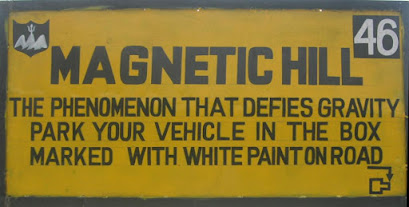
Magnetic hill is located near Leh in Ladakh.  It is 7.5 km southeast of Nimmoo and 26.5 km west of Leh on Srinagar-Ladakh road.

There are two theories that can explain the reason behind this uphill movement. The most common one is that the hill has a strong magnetic force which is why it pulls vehicles in the vicinity. In fact, so strong is this magnetic force that planes of the Indian Air Force avoid this route so that they don’t face magnetic interference on their devices.

Another equally popular theory is that of an optical illusion.

 According to this, the hill does not really have a magnetic force but

 it just creates an optical illusion of sorts so that the road, which

 actually goes downhill, seems as if it goes uphill. Therefore, when

 you see the vehicle going upslope, it is actually the opposite and

 does not defy the laws of nature. 


Read More

Saturday, August 14, 2021

Hall of Fame


Hall of Fame is a museum constructed by the Indian Army in memory of the brave Indian soldiers who laid down their lives defending the motherland in the Indo-Pak wars. The Hall of Fame museum is located on the Leh about 4km from the city on Leh Srinagar highway. It stands as a reminder of the great sacrifices made by our soldiers to ensure the safety and security of our country.


                                   Anti aircraft gun


The Hall of Fame museum, consisting of two stories, is divided into various sections which contain several displays. In the upper floor, there is a section named OP Vijay Gallery. Here, you can see the various kinds of weapons used in the Kargil war, along with the various arms and ammunition captured by the Indian Army during the war. 


                                  weapons of enemy


On the same floor, in yet another section, various kinds of apparel and amenities used by the Indian Army in the Siachen region have also been displayed. Some of these show the pictures of army posts on the glacier, living accommodation of the troops and the training process of the troops on ice walls, besides others.

If you head to another section of the same ground floor, you will find the pictures of Kargil War on the walls. The pictures provide an elaborate and fascinating account of how the Indian Army fought the war. There is also a wall named "Lest We Forget" which displays the photographs of those soldiers who laid down their lives defending our nation. It's a very moving sight to come across and reminds you of the enormous sacrifices made by our soldiers to ensure that our country is safe and secure from foreign aggression at all times.


                                                                 Wall of Heroes


On the same ground floor, there is also a projection room where you can watch a documentary on "Operation Vijay". One particular moving sight on this floor meets you in the form of a frame on a wall named "The Last Post". This was the letter written by Captain Vijayant Thapar to his parents some days before he attained martyrdom. Upon reading the letter, you are overcome by a profound sense of grief and pride, while your eyes well up with tears. You are reminded of the bravery and exemplary courage displayed by our soldiers while performing their service in the line of duty.

The last post is an exhibit dedicated to Captain Vijayant Thapar, 22, who died while evicting intruders from a ridge in Kargil on June 28, 1999.


On the ground floor, there is a section which displays the history, culture and other associated facts with Ladakh. It also consists of a souvenir shop where you can buy several items including t-shirts, caps, coffee mugs and pashmina shawls, besides others. You can also get a photo shoot clad in the Ladakhi attire in the photo shop and get the prints after paying a small amount of money.

Read More

Saturday, July 10, 2021

Shanti Stupa

    Shanti Stupa


Situated at a height of 3,609 metres (11,841 ft), the stupa is located 5 kilometres (3.1 mi) from Leh on a steep hill facing the Leh Palace
It is a Buddhist white-domed stupa (chorten) on a hilltop in Chanspa, Leh district, Ladakh, in north India. It was built in 1991 by Japanese Buddhist Bhikshu, Gyomyo Nakamura and part of the Peace Pagoda mission. The Shanti Stupa holds the relics of the Buddha at its base, enshrined by the 14th Dalai Lama. The stupa has become a tourist attraction not only due to its religious significance but also due to its location which provides panoramic views of the surrounding landscape.
The Shanti Stupa was built by both Japanese Buddhists and Ladakh Buddhists. Original idea was stated by Nichidatsu Fujii (Fujii Guruji) in 1914. The mission of Nichidatsu Fujii was to build Peace Pagodas and temples over the world and try to resurrect Buddhism back in India.


Construction of the Shanti Stupa began in April 1983 under the supervision of Bhikshu Gyomyo Nakamura and Kushok Bakula, a lama of Ladakh from New Delhi, member of the Minority commission of Govt of India, former statesman and former international diplomat of the Republic of India.The project was built with the help of Ladakhi Buddhists, who offered voluntary labour, and Japanese Buddhists, who consider India as the "sacred" birthplace of the Buddha. The then Prime Minister of India, Indira Gandhi, sanctioned the construction of a vehicular road to the stupa in 1984. The state government also provided some financial assistance for the construction of the Shanti Stupa. The 14th and current Dalai Lama, Tenzin Gyatso inaugurated the Shanti Stupa in August 1991


The Shanti Stupa features the photograph of the current Dalai Lama with the relics of the Buddha at its base. The stupa is built as a two-level structure. The first level features the central relief of Dharmachakra with deer on each side. A central golden Buddha image sits on a platform depicting the "turning wheel of Dharma" (Dharmachakra). The second level has reliefs depicting the "birth" of Buddha, the death of Buddha (mahanirvana) and Buddha "defeating the devils" while meditating. Both levels feature a series of smaller meditating Buddha reliefs.
The Shanti Stupa was built to promote world peace and prosperity and to commemorate 2500 years of Buddhism. It is considered a symbol of the ties between the people of Japan and Ladakh
Read More

Category

Search

Labels

© 2020 KnowLadakh. Designed by KnowLadakh
Powered by Blogger.